Sinus Lift
What is a dental sinus lift? Learn more about sinus lift treatment options.
Book Free Consultation
What Is a Sinus Lift and Why May It Be Needed?
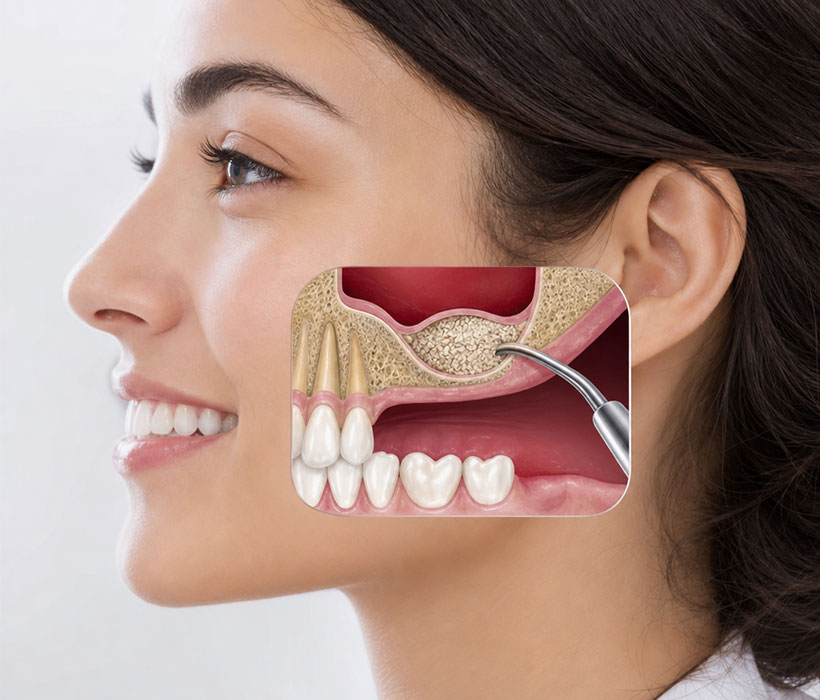
The maxillary sinuses are located above the back teeth of the upper jaw and can limit the amount of bone available for dental implant placement, particularly after teeth have been missing for a long time. Following tooth loss, the jawbone may gradually lose volume, while the sinus floor may become closer to the planned implant site.
A sinus lift is a surgical procedure used to increase the available bone in this area before or alongside implant treatment. During the procedure, the sinus membrane is carefully elevated and a suitable bone graft is placed in the space created beneath it. The aim is to provide sufficient bone support for the planned dental implant.
A sinus lift is not required for every implant placed in the upper jaw. The need for the procedure is determined by assessing the available bone, sinus anatomy, planned implant position and findings from 3D imaging together.
Open and Closed Sinus Lift Techniques
A sinus lift can be performed using different techniques depending on the amount of additional bone required, the existing bone volume and the anatomy of the maxillary sinus. The aim is to create suitable bone support for implant placement in a controlled and predictable way.
When Greater Bone Augmentation Is Required
An open, or lateral, sinus lift may be considered when the available bone in the back of the upper jaw is limited and a greater increase in bone volume is required.
The sinus is carefully accessed through the side of the upper jaw. The sinus membrane is gently elevated, and bone graft material is placed in the space created beneath it.
Whether the dental implant can be placed at the same appointment depends on factors including the available bone support and whether adequate initial implant stability can be achieved.
When a More Limited Lift May Be Sufficient
A closed, or internal, sinus lift may be considered when the existing bone conditions are more favourable and a smaller elevation of the sinus floor may provide sufficient additional space.
The procedure is performed through the implant site. The sinus floor is carefully elevated, and bone graft material may be placed in the space created where appropriate.
In suitable clinical conditions, the dental implant may be placed during the same appointment.
Which Technique Is Most Appropriate?
The choice between an open and closed sinus lift is not based on bone height alone. CBCT and 3D imaging are used alongside the clinical assessment to evaluate the available bone volume, sinus anatomy, condition of the sinus membrane and planned implant position. These findings help determine the most appropriate surgical approach for each individual case.
Who May Need a Sinus Lift?
A sinus lift may be considered when there is insufficient bone in the back of the upper jaw to support the planned dental implant. Whether the procedure is needed is determined through a clinical examination and 3D imaging.
- Insufficient bone height in the back of the upper jaw to support an implant
- Loss of jawbone volume following long-term tooth loss
- Limited available bone due to the proximity of the sinus floor to the planned implant site
- A need to create more suitable bone volume and support for the planned implant
What Is Assessed Before Treatment?
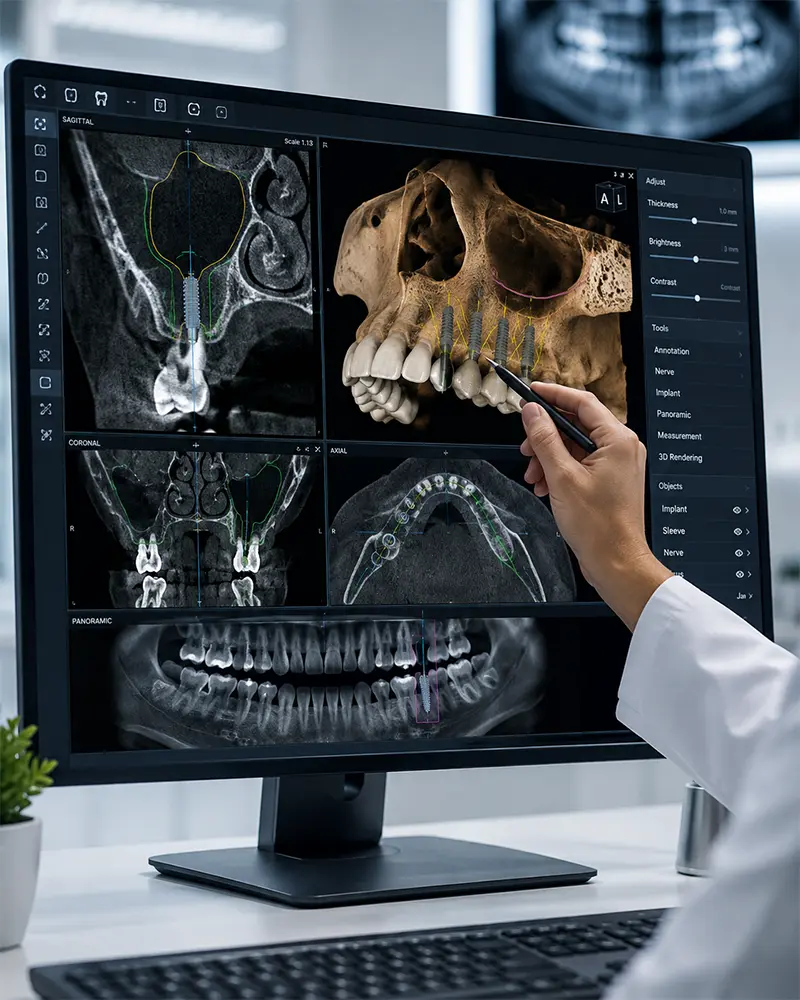
Sinus lift planning involves more than assessing the amount of available bone. CBCT imaging is used to evaluate the bone volume, maxillary sinus anatomy and planned implant position in three dimensions, alongside the overall clinical assessment.
Sinus health, medications, smoking and other factors that may affect healing are also considered when determining the most appropriate surgical approach.
What to Consider After a Sinus Lift
Recovery after a sinus lift varies from person to person. Mild swelling, tenderness or a feeling of pressure around the sinus area may occur during the first few days. During this period, it is important to protect the surgical site and follow the post-operative instructions provided by your dentist.
Protect the Sinus Area
Avoid forcefully blowing your nose and activities that may create excessive pressure in the sinus area.
Pay Attention to Your Diet
Choose soft, mild foods during the first few days and avoid hard foods that could place unnecessary pressure on the surgical area.
Maintain Oral Hygiene
Continue your oral care without disturbing the surgical site and follow the hygiene instructions provided by your dentist.
Attend Your Follow-Up Appointments
Regular follow-up appointments are important for monitoring the healing of the bone graft and planning the next stage of implant treatment at the appropriate time.
The bone graft may take several months to integrate with the surrounding bone. The timing of implant placement, or when treatment can progress to the next stage, depends on the surgical technique used and how healing progresses.
Frequently Asked Questions About Sinus Lift Surgery
Sinus lift surgery is usually performed under local anaesthesia, with the aim of preventing pain during the procedure. Mild swelling, tenderness or a feeling of pressure around the sinus area may occur afterwards. These symptoms generally reduce as healing progresses.
No. A sinus lift may be considered when there is insufficient bone in the back of the upper jaw to support an implant, or when the anatomy of the maxillary sinus limits implant placement. The need for the procedure is determined following a clinical examination and 3D imaging.
Yes, in some cases. When sufficient bone support is available and adequate initial implant stability can be achieved, the implant may be placed during the same appointment as the sinus lift. Where more extensive bone augmentation is required, the bone graft may need time to heal before implant placement.
Initial soft-tissue healing generally takes place relatively quickly, while integration of the bone graft with the surrounding bone may take several months. The overall healing period varies depending on the surgical technique, the extent of grafting and individual healing.
As with any surgical procedure, sinus lift surgery involves potential risks. These may include perforation of the sinus membrane, infection, bleeding, swelling or inadequate integration of the bone graft. Careful assessment, appropriate surgical planning and following post-operative instructions are important in managing these risks.
Get in Touch
Speak with our team via phone or WhatsApp to learn more about this treatment and receive personalised advice.