English
Contact Us
>
>
All-on-4 & All-on-6 Dental Implants
All-on-4 and All-on-6 dental implant treatments in Istanbul

All-on-4 & All-on-6 Dental Implants

Learn more about all-on-4 and all-on-6 dental implants treatment options.

What Our Patients Say

5.0
★★★★★
Based on Google Review
Book Free Consultation
All-on-4 & All-on-6

Full-Arch Implant Treatment

Full-arch implant treatment is designed to replace all missing or failing teeth in the upper or lower jaw with a fixed implant-supported restoration. Using CBCT imaging and 3D digital planning, the position of the implants is carefully planned according to the available bone, jaw anatomy and prosthetic requirements.

In suitable cases, fixed temporary teeth may be placed on the same day as implant surgery, allowing you to leave the clinic with a fixed temporary restoration while the implants heal and integrate with the jawbone.

Whether All-on-4® or All-on-6® is more appropriate is determined after a detailed clinical and radiographic assessment. The choice depends on factors such as bone volume and quality, jaw anatomy, bite and the planned final restoration, allowing the treatment approach to be tailored to your individual clinical needs.

All-on-4 and All-on-6 full-arch implant treatment planning
Positioning of four implants in the jaw for All-on-4 treatment
All-on-4

What Is All-on-4® Implant Treatment?

All-on-4® implant treatment is a full-arch implant solution in which a fixed set of teeth is supported by four dental implants in a jaw with complete tooth loss.

Typically, two implants are positioned more vertically in the anterior region, while the two posterior implants may be placed at an angle according to the anatomy of the jaw. This approach helps make effective use of the available bone and supports the planning of a fixed full-arch restoration.

Before treatment, the position and angle of the implants, together with the planned restoration, are assessed using 3D imaging and digital planning. Where clinical conditions are suitable, fixed temporary teeth may also be fitted on the same day as implant placement.

4 Implants
1 Fixed Full-Arch Restoration
3D Digital Planning
All-on-6

What Is All-on-6® Implant Treatment?

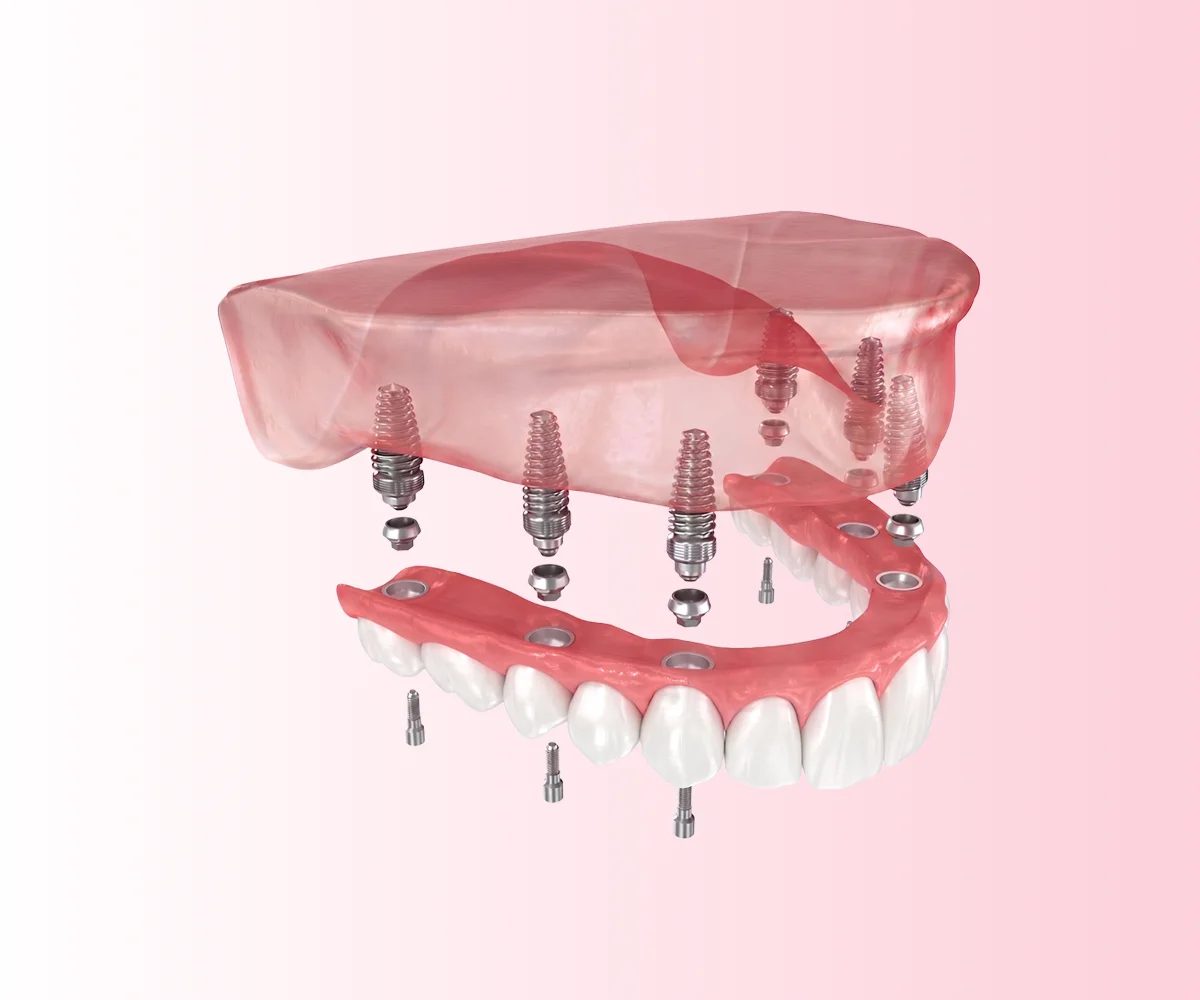
All-on-6® implant treatment is a full-arch implant solution in which a fixed set of teeth is supported by six dental implants in a jaw with complete tooth loss.

The planned distribution of six implants across the jaw allows the fixed restoration to be supported over a broader area. For this reason, the available bone volume and anatomical structures in the planned implant positions are carefully assessed when determining whether All-on-6® treatment is suitable.

The position and angle of the implants, together with the design of the restoration, are determined using 3D imaging and digital planning. Where clinical conditions are suitable, fixed temporary teeth may also be fitted on the same day as implant placement.

6 Implants
1 Fixed Full-Arch Restoration
3D Digital Planning
Positioning of six implants in the jaw for All-on-6 treatment
Treatment Options

Differences Between All-on-4® and All-on-6®

All-on-4® and All-on-6® are two different treatment approaches used to support a fixed full-arch restoration in a jaw with complete tooth loss. The main differences relate to the number of implants used and how they are distributed within the jawbone.

04

All-on-4®

Implant Number 4 Implants
Implant Distribution 2 Anterior + 2 Posterior Implants
Posterior Implants May Be Placed at an Angle
Bone Structure Planned to Make Effective Use of Available Bone
Restoration Fixed Full-Arch Restoration
06

All-on-6®

Implant Number 6 Implants
Implant Distribution Broader Distribution Across the Jaw
Support Area Support Across Six Implants
Bone Structure Requires Sufficient Bone Volume in Planned Implant Sites
Restoration Fixed Full-Arch Restoration

Which Treatment Is Right for You?

The choice between All-on-4® and All-on-6® is not based on the number of implants alone. Bone volume and quality, jaw anatomy, bite, chewing forces and the requirements of the planned fixed restoration are assessed together to determine the most appropriate treatment plan for you.

Treatment Suitability

Who May Be Suitable for All-on-4® and All-on-6®?

Suitability for full-arch implant treatment is determined by assessing the condition of the existing teeth, jawbone structure, general health and the requirements of the planned fixed restoration.

01

Complete Tooth Loss

For those who have lost all of their teeth in the upper or lower jaw, treatment may be considered as an option for a fixed full-arch restoration.

02

Teeth That Cannot Be Preserved

Full-arch implant treatment may be planned in cases involving advanced gum disease, extensive tooth loss or teeth with a poor prognosis that cannot be predictably preserved.

03

Seeking a Fixed Alternative to Removable Dentures

For people who are dissatisfied with removable dentures and meet the appropriate clinical criteria, fixed implant-supported teeth may provide an alternative treatment option.

04

Suitable Bone and Jaw Anatomy

Bone volume, bone quality and relevant anatomical structures are carefully assessed using 3D imaging to determine whether the implants can be safely and appropriately planned.

Factors to Consider Before Treatment

Insufficient Bone Volume

In some cases, additional surgical procedures or an alternative implant approach may be required.

General Health

Certain uncontrolled health conditions may affect healing and the process of osseointegration.

Smoking

Heavy smoking may adversely affect healing and the long-term success of implant treatment.

Bruxism and High Chewing Forces

Habits such as teeth grinding or clenching should also be considered when planning treatment.

Treatment Process

All-on-4® & All-on-6®
Treatment Process

Your treatment plan is tailored to your jawbone structure and individual clinical requirements. The process generally progresses from examination and digital planning through implant placement, healing and the fitting of your final fixed teeth.

01

Examination and Digital Planning

Before treatment, a comprehensive oral examination is carried out to assess your existing teeth, gum health and jawbone. Panoramic X-rays and, where required, 3D CBCT imaging are used to evaluate bone volume and relevant anatomical structures.

Using this information, the number, position and angle of the implants and the design of the planned fixed restoration are determined. The decision between All-on-4® and All-on-6® is also made as part of this assessment.

3D CBCT planning for All-on-4 and All-on-6 implant treatment
02

Surgical Preparation

Any necessary preparations are completed according to your treatment plan. If there are teeth that cannot be preserved, their extraction may be planned as part of the treatment. Implant surgery is generally performed under local anaesthesia.

Depending on the extent of the procedure and your individual needs, additional options to improve comfort, including sedation where appropriate, may also be considered.

03

Implant Placement

Following the positions established during digital planning, four implants are placed in the jawbone for All-on-4® treatment or six implants for All-on-6® treatment.

In All-on-4® treatment, the posterior implants may be positioned at an angle according to the anatomy of the jaw and the available bone. The aim is to establish appropriate implant support and provide a stable foundation for the planned fixed restoration.

04

Fixed Temporary Teeth

Where the implants achieve sufficient initial stability and the clinical conditions are appropriate, fixed temporary teeth may be fitted on the same day as implant placement.

The temporary restoration helps maintain appearance and function while the implants heal and integrate with the jawbone. During this period, dietary and care instructions should be followed to avoid excessive forces on the implants.

Learn more about same-day fixed temporary teeth with Fast & Aesthetic®
05

Healing and Final Teeth

The osseointegration process, during which the implants integrate with the jawbone, generally takes several months. During this period, maintaining good oral hygiene, avoiding hard foods and attending scheduled follow-up appointments are important.

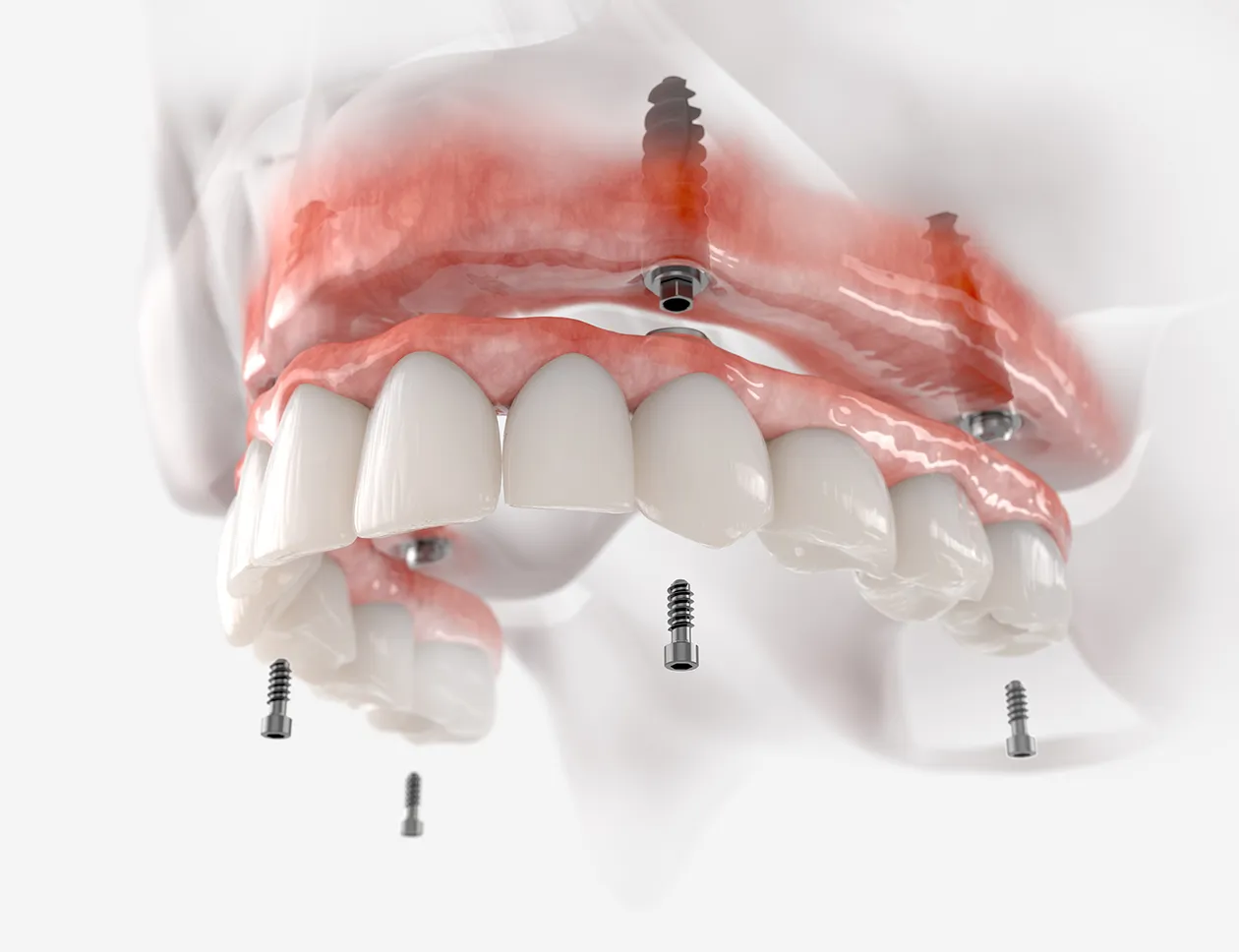
Once healing is complete, the temporary restoration is removed and the final fixed restoration, made according to your measurements and treatment plan, is fitted to the implants. The fit of the restoration, bite and ease of cleaning are carefully checked before treatment is completed.

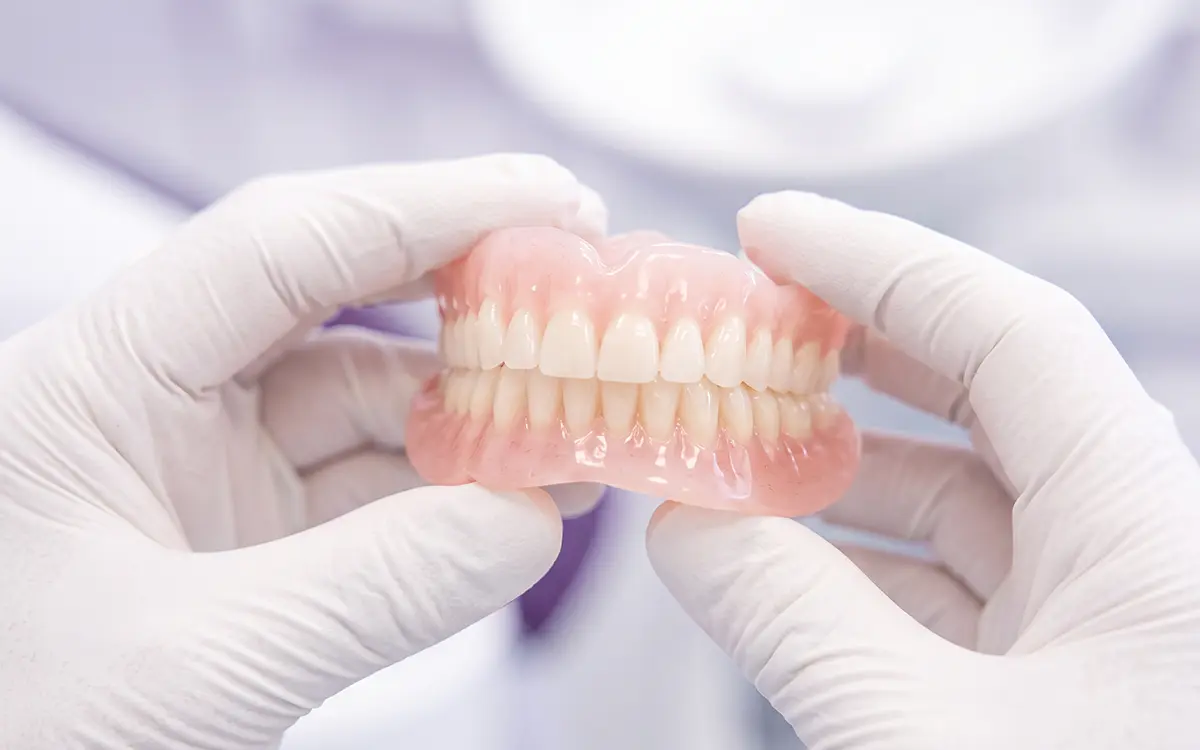
Final fixed full-arch restoration for All-on-4 and All-on-6 treatment
After Treatment

What Should You Consider During Healing?

Nutrition, oral hygiene and regular check-ups play an important role during the healing period, helping the implants integrate successfully with the jawbone.

01

Soft Diet

Especially during the initial healing period, soft and easy-to-chew foods should be preferred to avoid placing excessive pressure on the implants.

02

Oral Hygiene

The areas around and beneath the fixed restoration should be cleaned regularly using the recommended oral hygiene products.

03

Protecting the Temporary Teeth

While wearing fixed temporary teeth, hard foods and habits that may place excessive force on the implants should be avoided.

04

Regular Check-ups

The implants, gums and restoration are monitored at regular appointments, followed by an appropriate long-term maintenance plan.

Treatment Benefits

Benefits of All-on-4® &
All-on-6® Treatment

Fixed Teeth Comfort

Compared with removable dentures, fixed implant-supported teeth can provide greater stability and confidence in everyday use.

More Effective Chewing

Implant support can provide stronger and more balanced chewing function.

Natural-Looking Smile

Fixed teeth are individually designed to complement your facial features, lips and smile.

Support for Jawbone Preservation

Implants provide functional stimulation to the jawbone and may help reduce the bone loss that can occur following tooth loss.

Confidence in Everyday Life

A stable, fixed restoration can help you feel more comfortable when speaking, eating and socialising.

Long-Term Fixed Solution

With appropriate oral hygiene, regular maintenance and dental check-ups, implant-supported teeth can provide a long-term fixed solution.

Implantology, Oral Surgery and Cosmetic Dentistry
Our Clinic

Why Choose Us?

MSc. Dt. Aykut Koşun has treated more than 10,000 patients and completed over 3,500 complex implant cases throughout more than 19 years of professional experience.

CBCT imaging and digital planning technologies are used to assess the jawbone and relevant anatomical structures in detail. The position and angle of the implants, together with the planned restoration, are individually planned before treatment.

Surgical procedures are performed under local anaesthesia. Where appropriate, digital anaesthesia and sedation options may be considered to make the treatment experience more comfortable. Any necessary medication and detailed aftercare instructions are also provided following the procedure.

Biocompatible implant materials and restorative materials selected for long-term clinical use are used in treatment. The choice of implant system and restoration is determined according to individual clinical requirements.

Fixed teeth and zirconia restorations are prepared in our in-house dental laboratory. Tooth shape, colour, bite and the fit of the restoration are planned through direct coordination between the clinical team and dental laboratory.

Where sufficient initial implant stability is achieved and clinical conditions are appropriate, fixed temporary teeth may be fitted on the same day as implant surgery.

Learn more about Fast & Aesthetic® treatment

The scope of treatment, estimated timeframe, planned procedures, healing period and potential risks are discussed in detail before treatment begins. This helps you understand what to expect at each stage of your treatment.

FAQ

Frequently Asked Questions About All-on-4® & All-on-6®

The main difference is the number and distribution of implants used in each jaw. All-on-4® treatment uses four implants, while All-on-6® treatment uses six. The most appropriate approach is determined by assessing factors such as bone structure, jaw anatomy, chewing forces and the requirements of the planned fixed restoration.

Suitability is assessed according to the condition of your existing teeth, bone volume and quality, jaw anatomy, general health and prosthetic requirements. For people with complete tooth loss, or whose remaining teeth cannot be predictably preserved, fixed full-arch implant treatment may be an appropriate option.

Where sufficient initial implant stability is achieved and clinical conditions are appropriate, fixed temporary teeth may be fitted on the same day as implant placement. This decision is based on your treatment plan and the clinical findings during surgery.

In suitable cases, implant surgery and the fitting of temporary teeth may be completed on the same day. Osseointegration, during which the implants integrate with the jawbone, generally takes several months. Once healing is complete, the final fixed restoration can be prepared and fitted.

Implant surgery is generally performed under local anaesthesia, with the aim of keeping you comfortable and preventing pain during the procedure. Mild discomfort, tenderness or swelling may occur for a few days afterwards, although recovery varies from person to person.

No. The need for bone grafting depends on the available bone volume, jaw anatomy and planned implant positions. In some cases, the existing bone may provide sufficient support, while in others, additional procedures to increase bone volume may be required.

The longevity of dental implants depends on several factors, including oral hygiene, general health, smoking, chewing forces and regular dental check-ups. Good oral hygiene and ongoing clinical maintenance can help support the long-term health of both the implants and the fixed restoration.

Get in Touch

Speak with our team via phone or WhatsApp to learn more about this treatment and receive personalised advice.

Make an enquiry... 1