Wisdom Tooth Removal
Learn more about wisdom tooth extraction treatment options.
Book Free ConsultationWhen Should a Wisdom Tooth Be Removed?
Not every wisdom tooth needs to be removed. Wisdom teeth that have erupted in a healthy position, can be cleaned effectively and are not causing problems with the surrounding tissues may simply be monitored during regular dental check-ups. The decision to remove a wisdom tooth is based on its position, any symptoms it is causing and its effect on the surrounding teeth and tissues.
Recurrent Pain and Infection
Food debris and bacteria can accumulate around a partially erupted wisdom tooth. This may lead to recurrent gum infections, tenderness, swelling and difficulty opening the mouth.
Impacted or Partially Erupted Wisdom Teeth
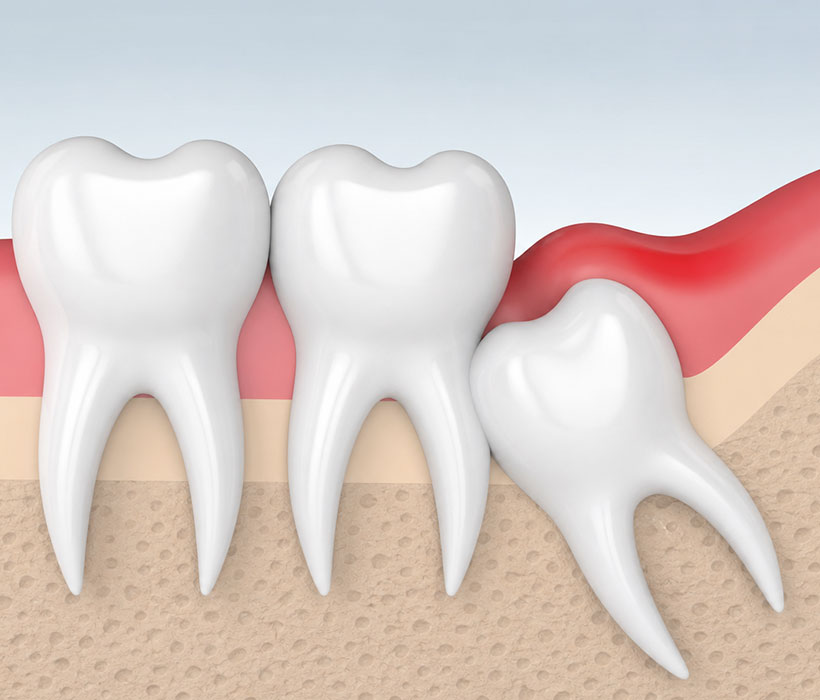
When there is not enough space in the jaw, a wisdom tooth may remain impacted, erupt only partially or develop at an unfavourable angle. Its position and relationship with the surrounding tissues are assessed together when determining whether treatment is required.
Tooth Decay and Difficulty Cleaning
Wisdom teeth are located at the very back of the mouth, which can make them difficult to reach and clean effectively. This is particularly common with partially erupted teeth and may increase the risk of decay in both the wisdom tooth and the neighbouring molar.
Effects on Neighbouring Teeth and Surrounding Tissues
A wisdom tooth in an unfavourable position may affect the neighbouring tooth or surrounding tissues. In some cases, cystic changes can also develop around an impacted wisdom tooth, making radiographic assessment of the area important.
Why Is Assessment Important?
The decision to remove a wisdom tooth is not based solely on whether it is impacted. A clinical examination and appropriate dental imaging are used to assess the tooth’s position, root structure and relationship with neighbouring teeth and surrounding anatomical structures.

How Is Wisdom Tooth Removal Performed?
Wisdom tooth removal may involve a straightforward extraction or a surgical procedure, depending on the position of the tooth. Before treatment, a clinical examination and appropriate imaging help determine the most suitable approach for removing the tooth safely and in a controlled manner.
Examination and Imaging
The tooth’s eruption, root structure and relationship with neighbouring teeth are assessed using dental imaging. For impacted wisdom teeth in particular, the proximity of the roots to the nerve canal and other anatomical structures is carefully considered when planning the procedure.
Local Anaesthesia
A fully erupted wisdom tooth may be removed using a straightforward extraction technique when appropriate. For impacted or partially erupted teeth, a small incision in the gum may be required to access the tooth, and in some cases a limited amount of surrounding bone may also need to be removed.
Controlled Removal of the Tooth
A fully erupted wisdom tooth may be removed using a straightforward extraction technique when appropriate. For impacted or partially erupted teeth, a small incision in the gum may be required to access the tooth, and in some cases a limited amount of surrounding bone may also need to be removed.
Sectioning the Tooth When Necessary
If the position or root structure of the tooth makes removal in one piece difficult, the tooth may be divided into smaller sections to allow for more controlled removal. Once the extraction is complete, the area is cleaned and stitches may be placed when required.
Recovery After Wisdom Tooth Removal
Mild swelling, tenderness and slight oozing of blood may occur after wisdom tooth removal. These symptoms can be a normal part of the healing process, particularly following surgical removal, and usually begin to ease gradually after the first few days.
Recovery can vary depending on the position of the tooth, the type of extraction performed and individual healing. During this period, it is important to protect the extraction site and follow your dentist’s aftercare instructions.
What Can You Expect During the First Few Days?
Some tenderness and swelling around the area can be expected during the first few days. If stitches have been placed following surgical removal, the timing of your follow-up appointment and whether the stitches need to be removed will depend on the type of sutures used and your treatment plan.
Protect the Extraction Site
The blood clot that forms in the extraction site plays an important role in healing. During the first 24 hours in particular, avoid vigorous rinsing or spitting, as this may disturb the clot.
Choose Foods Carefully
Soft, lukewarm foods are generally preferable during the first few days. Avoiding very hot, hard or irritating foods for a short period can help protect the extraction site while it heals.
Maintain Good Oral Hygiene
It is important to continue looking after your oral hygiene. However, the extraction site should not be brushed directly or vigorously during the first few days. Clean the area gently and follow the specific instructions provided by your dentist.
Allow Time to Rest
It may be advisable to avoid strenuous exercise and intense physical activity during the first few days. The time needed to return to your usual daily activities can vary depending on the complexity of the extraction and how your recovery progresses.
When Should You Contact Your Dentist?
Contact your dentist if you experience pain or swelling that persists longer than expected or becomes increasingly severe, bleeding that does not stop, a fever, or other symptoms that may indicate an infection.
Frequently Asked Questions About Wisdom Tooth Removal
No. Wisdom teeth that have erupted in a healthy position, can be cleaned effectively and are not causing problems with the surrounding tissues may not need to be removed. The decision is made following a clinical examination and radiographic assessment, taking into account the position of the tooth, any symptoms it is causing and its relationship with the surrounding tissues.
No. An impacted wisdom tooth does not automatically need to be removed. Removal may be considered if it is associated with problems such as pain, recurrent infection, tooth decay, damage to a neighbouring tooth or cystic changes. Some impacted wisdom teeth that are not causing problems may instead be monitored with regular dental check-ups.
Wisdom tooth removal is usually performed under local anaesthesia, with the aim of preventing pain during the procedure. Mild pain, tenderness and swelling may occur afterwards, particularly following surgical removal. These symptoms usually ease as healing progresses.
Recovery varies depending on the position of the tooth and the complexity of the extraction. Swelling and tenderness usually reduce noticeably within the first few days. The gum tissue generally heals sooner, while the underlying bone takes longer to heal fully.
Protecting the blood clot that forms at the extraction site is particularly important during the first 24 hours. It is advisable to avoid vigorous rinsing or spitting, very hot or hard foods, and strenuous physical activity. Good oral hygiene should be maintained, while the extraction site should be cleaned gently according to your dentist’s instructions.
Get in Touch
Speak with our team via phone or WhatsApp to learn more about this treatment and receive personalised advice.